How is each sector faring in terms of jobs creation? What the latest job posting data is telling us

The current labor market landscape in early 2026 reflects a transition from the era of "growth at all costs" to a period of strategic automation and efficiency. The latest job posting data from Indeed helps to understand the story behind each sector, and which ones are still bearing job creation.
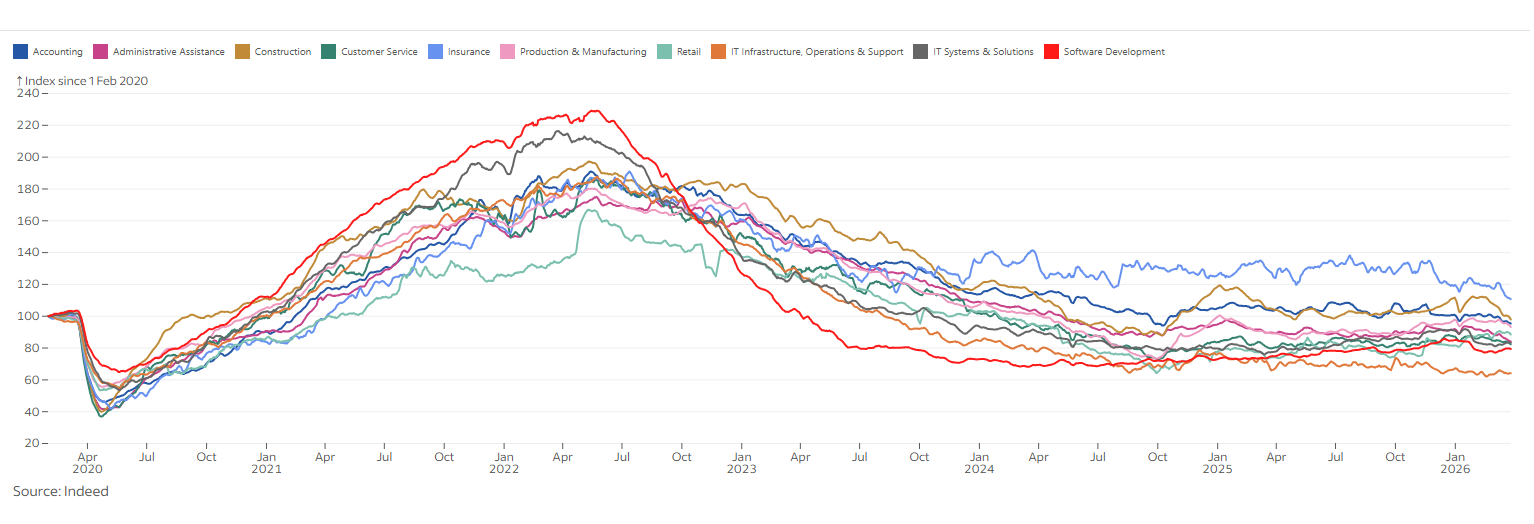
The sharp decline in Software Development and IT Systems postings toward the start of 2026 aligns with the rapid integration of generative AI in the workplace. Entry-level coding tasks, basic debugging, and routine system documentation are increasingly handled by automated agents, reducing the volume of junior-level job openings. Companies are prioritizing "force multiplier" roles (senior architects who can oversee AI-driven workflows) rather than the large teams of developers seen in 2021. Similarly, the stagnation in IT Infrastructure suggests that the migration to the cloud and the setup of remote-work systems are largely complete, leaving fewer openings for deployment-focused roles.
Insurance remains a notable outlier, maintaining a posting index above 100 throughout early 2026 meaning expansion. This resilience is likely driven by the increasing complexity of risk management in a world facing volatile climate events and cyber threats. Unlike repetitive data entry, the high-level actuarial and empathetic negotiation skills required in insurance have proven more difficult to automate. Construction follows a similar logic; despite high interest rates, the physical necessity of building and maintaining infrastructure provides a floor for job postings that digital-only sectors lack.
Subscribe now and have access to all our stories, enjoy exclusive content and stay up to date with constant updates.